
Technical Recruiting in 2026: How AI Is Changing the Way Startups Hire
How AI-powered headhunters are transforming technical recruiting, hiring technical talent, and global talent sourcing for startups in 2026

If you’re doing technical recruiting the same way you did three years ago, you’re already behind.
In 2026, AI-powered sourcing tools are running full pipelines: from global talent sourcing to pre-screening and outreach. This helios find the best talent while founders and hiring managers focus on final decisions.
I learned this the hard way.
After waiting three weeks for a traditional agency to send me candidates for a technical role, I ended up with two mismatched resumes and one ghosted interview. Over $400 spent with zero hires.
When I switched to AI-driven recruiting tools, I had 12 pre-screened, relevant candidates within 48 hours.
This is the new operating system for hiring technical talent.
Let’s break down what changed, and which platforms are worth your attention.
What Is AI-Powered Technical Recruiting?
AI recruiting software automates the parts of technical recruiting that normally eat up your time:
Searching job boards, LinkedIn, GitHub, and private databases
Parsing and ranking resumes
Identifying passive candidates
Sending outreach emails
Scheduling interviews
Tracking pipeline progress
Instead of manually reviewing 200 resumes, you define the role once. The system searches globally, evaluates fit, and delivers ranked shortlists.
For startups, this flips hiring from reactive to proactive.
Hiring Technical Talent Without Burning Out
Hiring technical talent has always been complex. You’re screening for skills while assessing depth, experience, and long-term fit.
Traditional global technical recruiters handle:
Cross-border hiring and remote roles
Passive candidate outreach
Screening for real technical competence
Navigating compensation differences across regions
AI tools now replicate much of this infrastructure at scale.
Instead of relying on a small agency network, AI platforms scan millions of profiles across regions. This makes global talent sourcing realistic for even five-person startups.
And it runs 24/7.
Why AI Is Replacing Traditional Recruiting Agencies
Let’s compare.
Traditional agency model:
15–20% placement fees
Weeks of waiting
Limited candidate pool
Manual filtering
AI recruiting platforms:
$100–$400 per month (or pay-on-hire models)
Shortlists within hours or days
Access to global databases
Automated outreach and screening
Agencies operate during business hours, but AI operates continuously.
Agencies send you “top five” candidates. But AI shows you ranked matches across thousands, and explains why they fit.
This is why technical recruiting teams that adopt AI are closing roles significantly faster than those still relying purely on manual workflows.
The Best Platforms for Technical Recruiting in 2026
I reviewed five AI recruiting tools. Two were fully testable; the others are in early access but promising.
Here’s the breakdown.
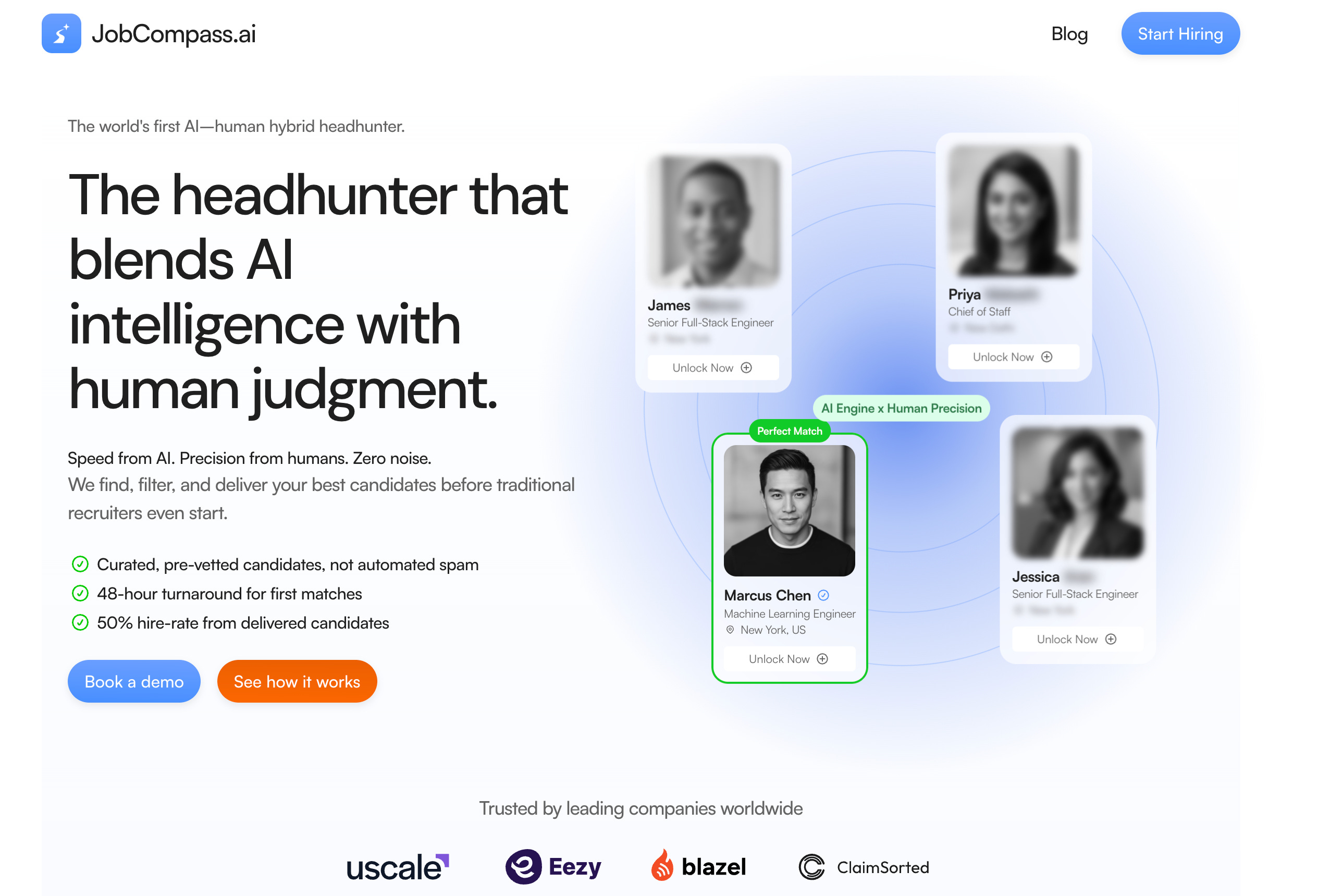
1. Job Compass: AI + Human Hybrid Headhunter
Job Compass positions itself as an AI-human hybrid headhunter.
The model is simple:
You define your brief.
AI scans global databases.
Humans review and filter the top 1%.
You receive a curated shortlist within 48 hours.
This solves one major AI problem: noise.
Instead of dumping 200 “close matches” into your inbox, Job Compass sends 1–3 serious candidates with rationale attached.
Pricing:
12% of first-year salary.
Best for:
Founders hiring for the first time
Niche technical roles
Teams that want curation without full agency fees
If you want AI speed but still value human judgment in technical recruiting, this hybrid model makes sense.
2. Jack & Jill: Dual AI Recruiter System
This platform operates with two AI agents:
Jack → works with candidates
Jill → works with companies
Instead of running software manually, you’re essentially assigning two AI recruiters to communicate and broker introductions.
What stood out:
Conversational onboarding
Strategic advice on role requirements
Coordinated introductions
Activity tracking (active vs passive candidates)
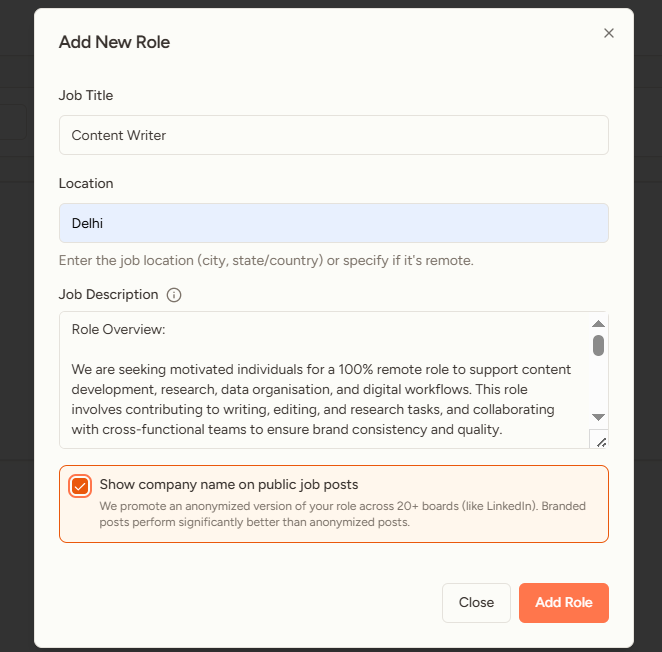
Within minutes, curated matches appeared in the dashboard.
Pricing:
10% of first-year salary, only when you hire.
VC-backed startups get the first hire free (up to a cap).
Best for:
Startups scaling quickly
Competitive talent markets
Teams tired of candidate ghosting
For hiring technical talent in saturated markets, this system reduces risk because you only pay when it works.
3. AI HeadHunter: Outbound Automation at Scale
AI HeadHunter focuses on outbound sourcing.
Instead of waiting for applications, it actively hunts across:
LinkedIn
GitHub
Professional databases
It uses semantic scoring, meaning it understands that:
“Built RAG pipelines”
and
“LLM summarization systems”
may indicate the same skill.
This matters in technical recruiting, where terminology varies widely.
Best for:
Independent recruiters
Agencies managing multiple clients
High-value executive placements
If speed determines whether you win placements, outbound automation is powerful.
4. Juicebox: High-Volume Global Talent Sourcing
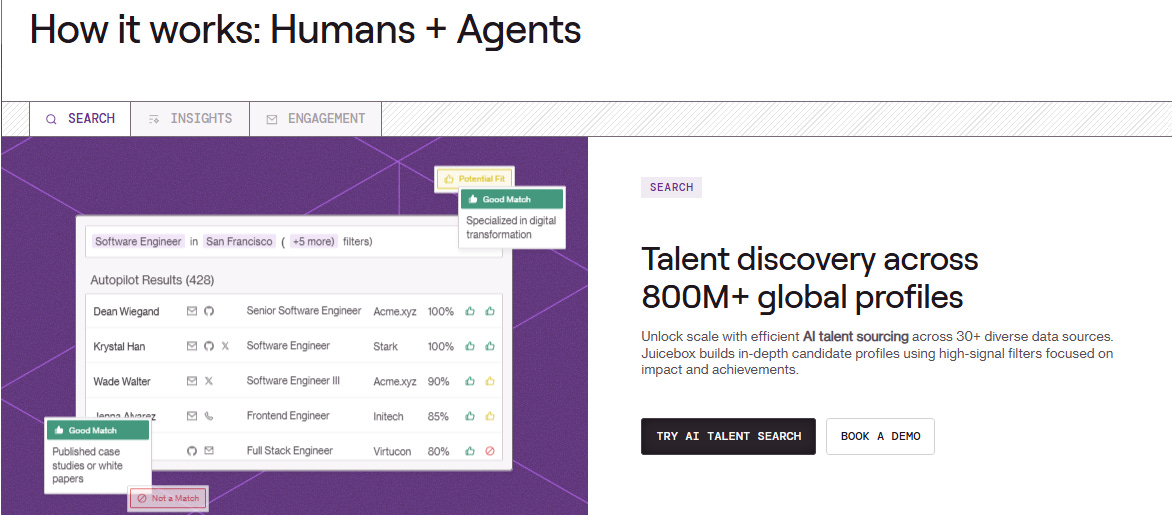
Juicebox impressed me with its raw scale.
One search surfaced thousands of filtered candidates from 800M+ profiles.
It offers:
Natural language search
AI agents that auto-source and auto-email
Talent insights dashboards
ATS integrations
Instead of starting at “search,” you start at “shortlist.”
Pricing:
Starts around $119/month.
AI agents available separately.
Best for:
Startups without recruiters
Agencies juggling multiple roles
High-volume technical recruiting
If your issue is pipeline size, Juicebox solves it immediately.
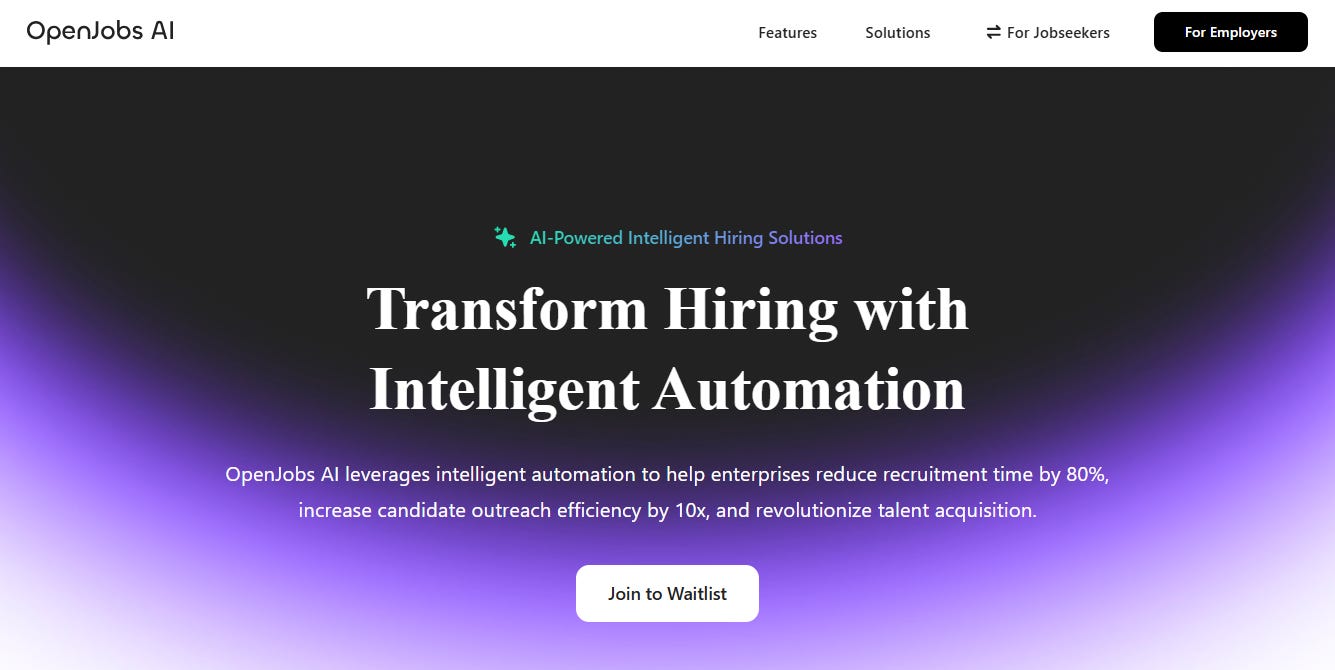
5. OpenJobs AI: Clean, Structured Automation
OpenJobs AI focuses on pipeline clarity.
Upload requirements → AI extracts skills → candidates ranked → outreach automated.
It emphasizes analytics and visibility, helping teams understand where candidates drop off in the funnel.
Currently invite-only, but worth monitoring.
The Real Benefits of AI in Technical Recruiting
Here’s what changes when you adopt AI:
Resume review time drops dramatically
Bias is reduced through blind screening
Hiring costs shrink vs agency fees
Parallel searches run automatically
Global talent sourcing becomes scalable
Most importantly: You stop wasting time on manual screening and start spending time on interviews that matter.
For lean teams, that difference is enormous.
Who Should Use AI for Hiring Technical Talent?
AI-powered technical recruiting makes the biggest impact for:
Early-stage startups (0–50 employees)
Growth-stage companies scaling engineering teams
HR teams without dedicated recruiters
Solo founders hiring for the first time
Remote-first global teams
Agencies handling 20+ concurrent searches
If you’re juggling product, fundraising, and hiring, automation is not optional anymore.
Should You Trust AI in Technical Recruiting?
Yes, but not blindly.
AI should:
Source
Screen
Rank
Automate outreach
Humans should:
Assess culture fit
Make final decisions
Read between the lines
Own accountability
The future of technical recruiting isn’t AI replacing recruiters. It’s recruiters who use AI replacing those who don’t.
Final Take
If you’re serious about hiring technical talent in 2026:
Try Jack & Jill if you want zero upfront risk.
Test Juicebox if you need volume immediately.
Explore Job Compass if you prefer curated shortlists.
Join early access for the others if you want to stay ahead.
The biggest mistake now is continuing to do technical recruiting the old way.
AI won’t eliminate the human side of hiring, but it eliminates the unnecessary friction.
And in startups, speed is leverage.
🙌 Affiliate Disclosure
This post contains affiliate links. If you purchase through them, I may earn a small commission at no extra cost to you. I only recommend products I trust or use myself. Your support keeps my content journey going — thank you!